Weather
Extreme Weather Events Surge Across Northern Nations
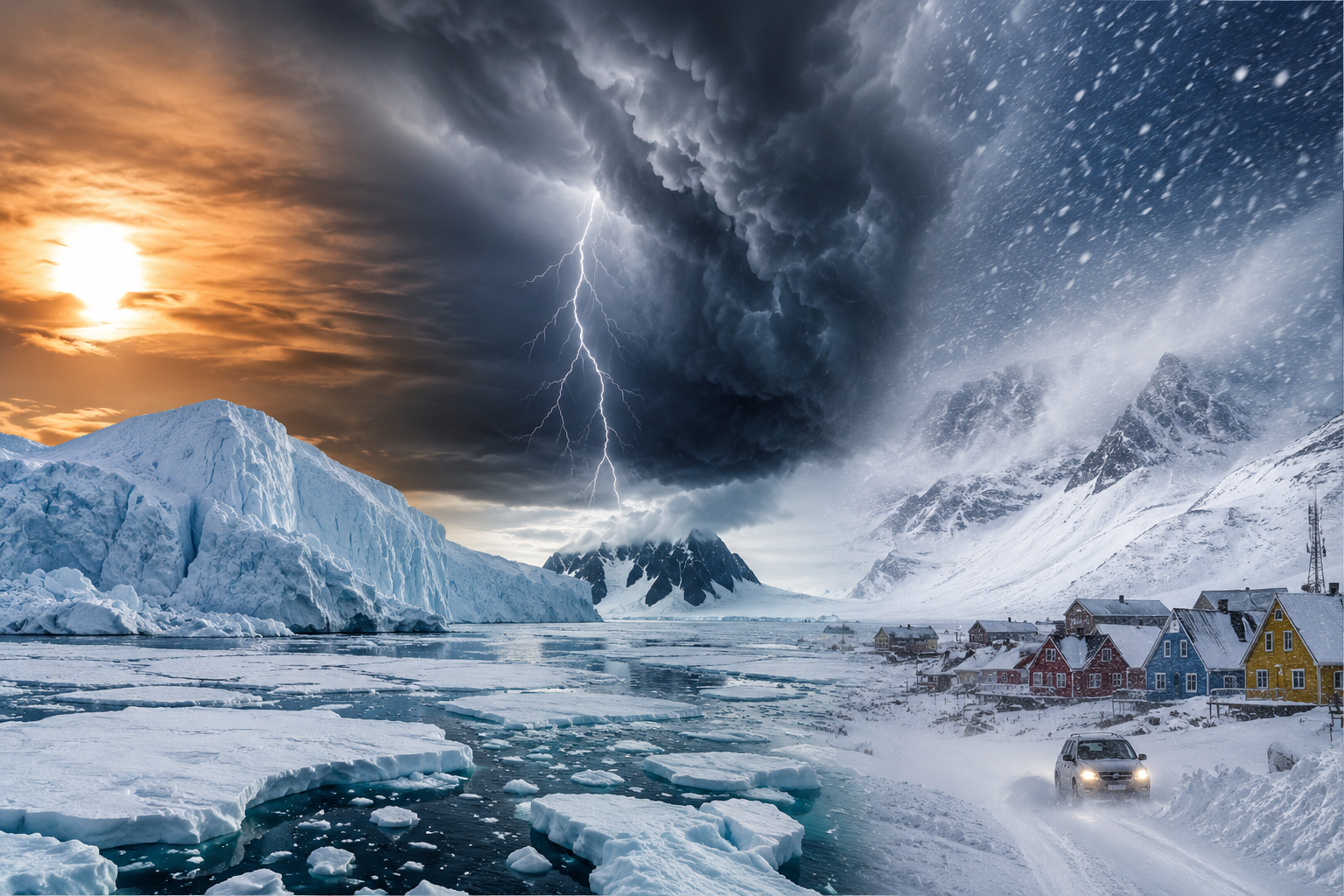
The Arctic is going through a change with really bad weather happening a lot more often. Scientists are saying that the Arctic is now in a time of unstable weather. They notice warm temperatures in Northern Europe and really cold winters, and the ice is melting faster. This is making it hard for countries in the Arctic to know what to expect.
Researchers from the Finnish Meteorological Institute and the University of Helsinki have been studying this. They found out that the Arctic is getting warmer three to four times faster than the rest of the world. Scientists are noticing bad weather like heatwaves that last a long-time winter that warm up, that sudden rain that falls on snow and strange cold periods are happening a lot more often than they used to. This has been happening more over the past thirty years, and the Arctic is experiencing extreme weather events like never before with the Arctic warming really fast.
In Finland, Norway, and Sweden, March 2026 was recorded as the mildest March on record across large parts of the European Arctic. Meanwhile, the Arctic Archipelago of Svalbard, part of Norway, experienced its third-warmest March since modern observations began.
Climate experts also note that Arctic winters are projected to be approximately 2.8°C warmer than the 1991–2020 average during the next five years. The warming trend is expected to accelerate sea ice loss and increase the frequency of extreme weather patterns affecting both Arctic communities and regions farther south.
The impact is already visible across the Arctic Ocean. Scientists report that Arctic sea ice remains near historic lows, particularly in the Barents, Bering, and Okhotsk Seas. Reduced ice covers allow more heat to be absorbed by ocean waters, creating conditions that can fuel stronger storms and disrupt established weather patterns across Europe and North America.
Paradoxically, while the Arctic is warming overall, some regions have also experienced severe cold outbreaks. In January 2026, a disrupted polar jet stream pushed Arctic air into parts of Europe and North America, producing the coldest January in Europe since 2010. Countries including Norway, Sweden, and Finland faced significant winter weather impacts despite long-term warming trends.
Researchers warn that these increasingly volatile conditions threaten Arctic ecosystems, Indigenous communities, transportation networks, and critical infrastructure. A recent international study concluded that extreme weather events are now appearing across nearly one-third of Arctic land areas where such conditions were previously rare or absent.
Key Arctic Weather Facts (2026):
- Arctic temperatures are warming 3–4 times faster than the global average.
- Finland, Norway, and Sweden recorded their mildest Arctic March on record in 2026.
- Arctic winters are forecast to be 2.8°C warmer than recent historical averages.
- Arctic sea ice remains near record-low levels.
- Europe experienced its coldest January since 2010 due to Arctic air outbreaks.
Scientists say the Arctic is becoming one of the world's fastest changing regions. As temperatures continue to rise and weather patterns grow more extreme, Arctic nations such as Finland, Norway, Sweden, Canada, and Iceland are increasingly on the front lines of climate change, providing a glimpse of challenges that may soon affect the rest of the world.
Source Links:
- https://en.ilmatieteenlaitos.fi/press-release/6Tn2VPkQq8ijLAVQdBFVl3
- https://alaskaclimate.substack.com?utm_source=navbar&utm_medium=web
- https://www.theguardian.com/environment/2026/may/28/climate-impacts-spiralling-more-record-global-heat-warns-un
- https://www.reuters.com/sustainability/cop/global-temperatures-reach-near-record-highs-next-five-years-report-finds-2026-05-28/
- https://wmo.int/media/news/extreme-heat-cold-precipitation-and-fires-mark-start-of-2026
- https://phys.org/news/2026-01-arctic-era-extreme-weather.html