Politics
Sweden Heads Towards a Closely Watched 2026 Election!
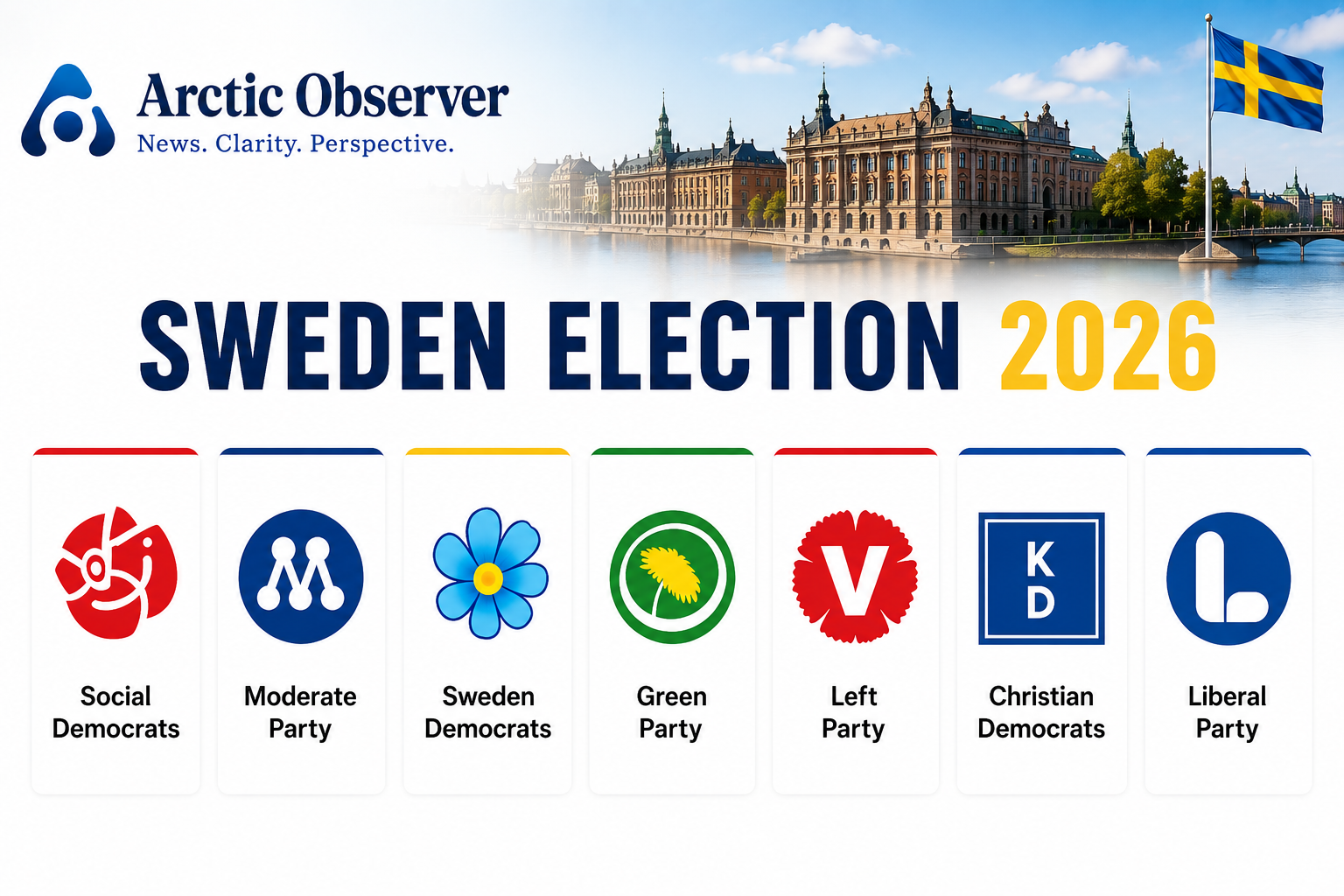
Cost of living, crime, immigration and the future of Sweden’s political direction are set to dominate the campaign as voters prepare to choose a new parliament.
Sweden is heading towards a crucial parliamentary election on 13 September 2026, when voters will decide who represents them in the Riksdag for the next four years. Elections for Sweden’s regional and municipal councils will take place on the same day.
The election comes at a time when Swedish politics is increasingly divided between a centre-left opposition led by the Social Democrats and a centre-right governing bloc led by Prime Minister Ulf Kristersson’s Moderates, which has relied on cooperation with the Sweden Democrats.
The political stakes are high. Issues such as gang crime, immigration, the cost of living, energy, defence and national security are expected to play a major role in determining how voters cast their ballots.
Recent polling has given the opposition reason for optimism. A major Swedish Statistics Office survey published in June put the centre-left opposition at 55.2%, compared with 42.6% for the governing right-wing bloc. The Social Democrats alone were measured at 33.9%. The same survey put the Liberals below Sweden’s 4% parliamentary threshold, potentially complicating the governing bloc’s chances.
But the election is far from decided.
One of the biggest questions is the future role of the Sweden Democrats, whose influence has grown substantially in Swedish politics. Prime Minister Kristersson has said that if the right wins, his Moderates would be prepared to form a majority government with the Sweden Democrats, potentially giving the party a formal role in government rather than leaving it as an outside parliamentary supporter.
For the opposition, former Prime Minister Magdalena Andersson and the Social Democrats are seeking to return to government. Their challenge will be to maintain unity among parties with different priorities while convincing voters that they can address Sweden’s economic and security concerns.
The election will therefore be about more than simply choosing a prime minister. It could determine the balance between welfare and economic reform, the future of immigration policy, Sweden’s approach to crime and security, and the role of the Sweden Democrats in national government.
Swedish voters will go to the polls on 13 September, with the newly elected Riksdag scheduled to begin its work on 28 September.
For Sweden, the question is not simply who will win the election—but what kind of political Sweden will emerge afterwards.
— Arctic Observer.