Policy & Updates
No Dumping of Unsold Clothes; EU Rules!
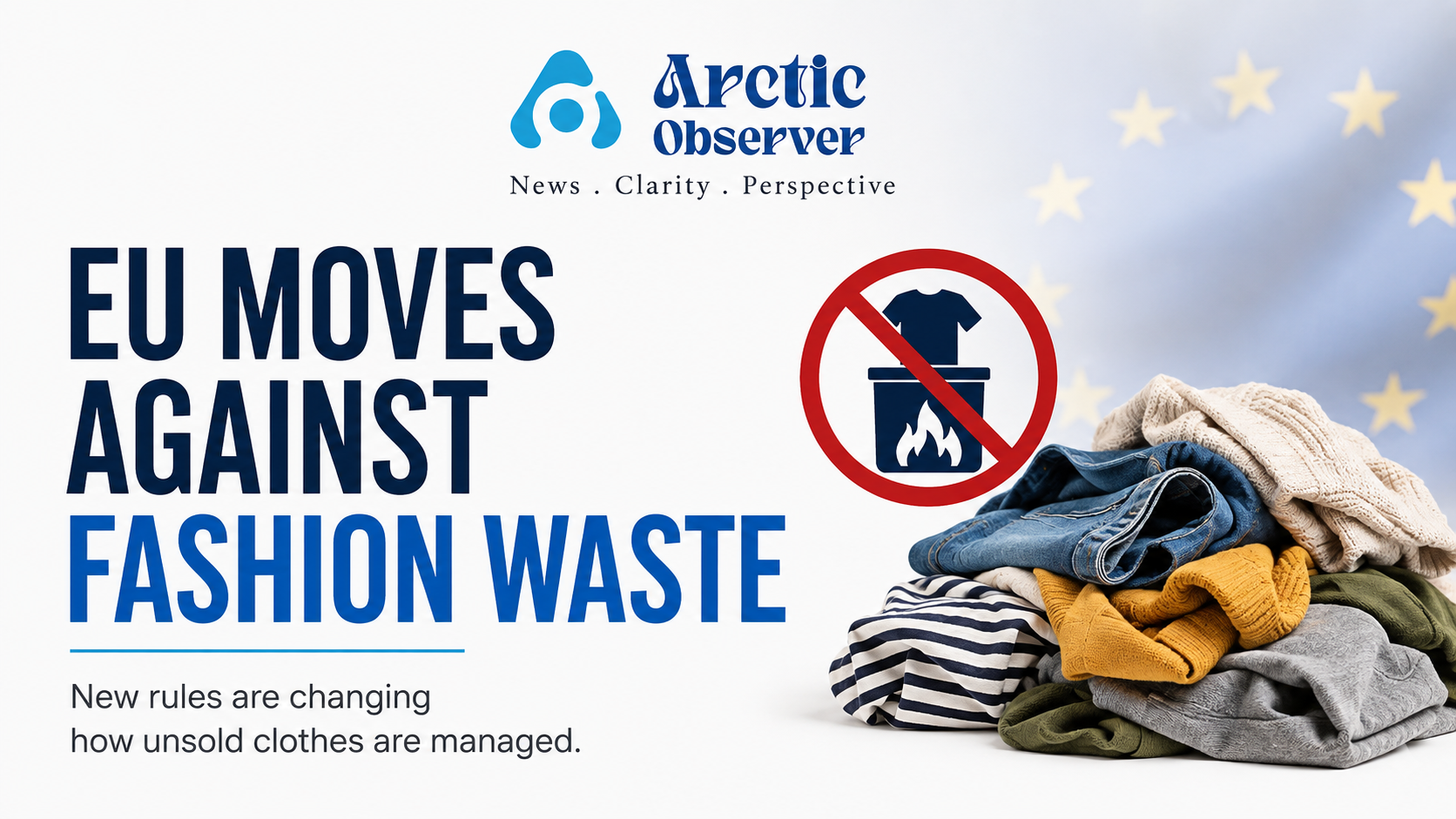
EU Moves Against Fashion Waste as Old ‘Produce and Dump’ Model Comes Under Pressure!
Unsold clothes can no longer simply disappear into incinerators. Europe’s new rules are forcing fashion brands to rethink how they produce, sell and manage excess stock!
BRUSSELS — Europe is drawing a line under one of fashion’s most wasteful practices: destroying clothes that fail to sell.
New European Union rules are restricting the destruction of unsold clothing, accessories and footwear, turning sustainability from a corporate slogan into a legal requirement.
The change could reshape the fashion business—from how brands forecast demand to how they manage returns, production and inventory.
Millions of garments, huge environmental cost
The scale of fashion waste is enormous. EU estimates suggest that 4% to 9% of clothing placed on the European market is destroyed before it is sold.
That means millions of products can consume raw materials, energy and labour—only to end up as waste.
The new rules require companies to consider alternatives before destruction. Unsold products can instead be sold at reduced prices, donated or repaired and refurbished for further use.
There are exceptions for products posing health or safety risks, serious defects, legal problems or intellectual-property concerns. But even then, companies face increased documentation and reporting requirements.
The end of overproduction?
For decades, fast fashion has operated on a simple calculation: produce more, sell what you can and deal with the leftovers later.
That model is becoming harder to sustain.
With destruction restricted, brands have a stronger incentive to avoid excess stock in the first place. That could mean smaller orders, shorter production cycles and faster responses to consumer demand.
Instead of guessing what shoppers will want months ahead, companies may increasingly rely on real-time sales data, artificial intelligence and digital forecasting.
Speed may become the new competitive advantage
The changes could also accelerate a shift towards production closer to major consumer markets.
Shorter supply chains can allow brands to replenish popular products quickly while reducing the risk of being left with large quantities of unwanted stock.
For suppliers, that could mean a move away from huge seasonal orders towards smaller, more frequent shipments.
For retailers, it could mean a fundamental change in inventory strategy.
Online shopping adds another problem
Fashion’s digital revolution has created another source of waste: returns.
Customers buying online often order several sizes or styles and send unwanted products back. Managing those returns is expensive—and some returned items can become difficult to resell.
The pressure to reduce waste could therefore push brands to improve sizing accuracy, product quality and return management.
The more accurately a company can predict what consumers actually want, the less excess stock it has to deal with.
From waste to a new market
The EU rules could also create winners.
Repair services, refurbishment businesses, resale platforms and textile-recycling companies could become increasingly important as brands search for alternatives to disposal.
Digital product tracking is likely to play a growing role too. Information about a garment’s materials, origin, durability, repair options and recyclability could increasingly follow the product throughout its life.
That would give consumers more information—and companies greater control over the product’s entire life cycle.
A turning point for fashion
Europe’s new approach is about more than stopping clothes from being burned or thrown away.
It challenges the economics of an industry built around volume, speed and constant replacement.
The next generation of fashion businesses may compete less on how much they can produce and more on how accurately they can forecast demand, how long their products last and what happens when those products are no longer wanted.
The message from Europe is increasingly difficult to ignore:
The future of fashion may not be about producing more. It may be about wasting less.