Politics
Sweden is Done, Finland Next!
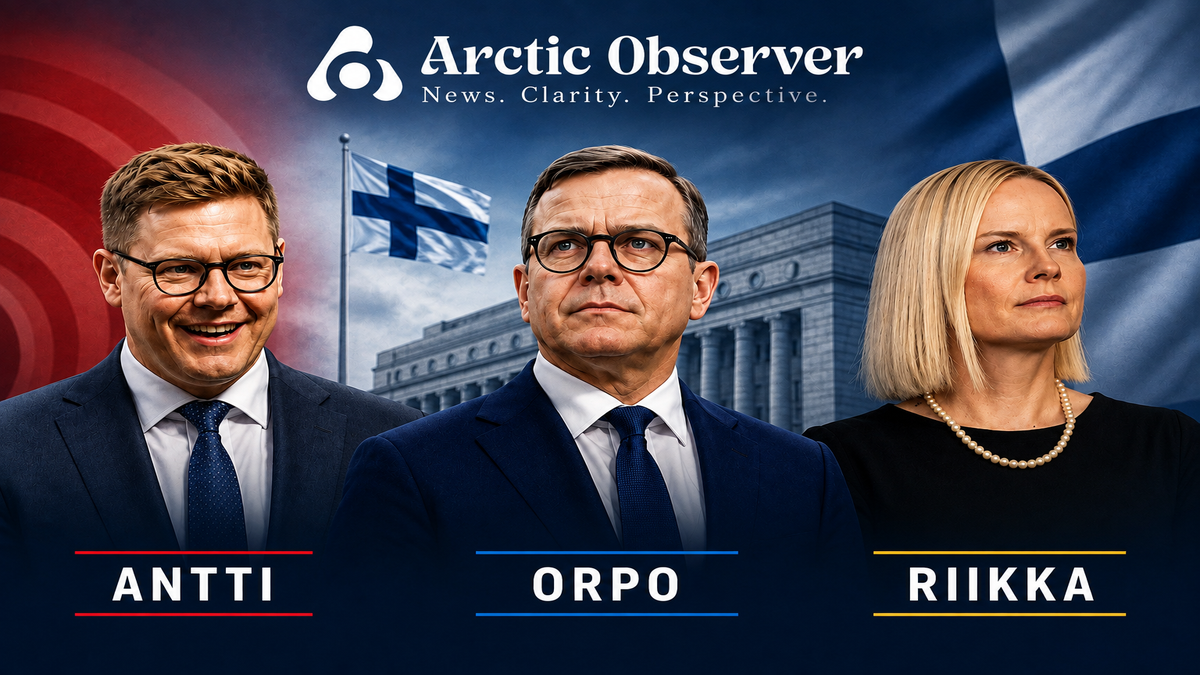
Sweden has voted. Now political attention turns north—to Finland.
Sweden’s 2026 parliamentary election has produced a remarkably close contest. Preliminary results put the centre-left opposition narrowly ahead of Prime Minister Ulf Kristersson’s right-wing bloc, while the Sweden Democrats have suffered a significant setback. The final result is still being confirmed.
But the Swedish election also sends a wider political message across the Nordic region: immigration, economic pressure, social cohesion and national identity remain among Europe’s defining political questions.
Finland will face its own version of that debate when voters elect a new Parliament on 18 April 2027. All 200 seats in the Eduskunta will be contested.
Finland’s next political battle
The Finnish election is already taking shape around three major political narratives.
Antti Lindtman and the Social Democrats are seeking to put social cohesion, public services and the Nordic welfare model at the centre of the debate. Their challenge is to convince voters that protecting social security and reducing inequality can go hand in hand with economic renewal.
Prime Minister Petteri Orpo and the National Coalition Party are likely to make the economy a central battlefield. Finland faces weak growth, an ageing population and pressure on public finances. Orpo’s political argument is that structural reforms, employment and fiscal discipline are necessary to protect the welfare state in the long term.
Riikka Purra and the Finns Party are expected to keep immigration, national identity and security high on the agenda. The party’s influence has already changed the tone of Finnish political debate, particularly on immigration and integration.
These three approaches represent different answers to the same question:
What is Finland’s biggest problem—and what should be done about it?
Sweden’s lesson for Finland
The Swedish election demonstrates how difficult these questions have become.
The Sweden Democrats, despite remaining a major political force, have lost support compared with 2022. At the same time, immigration and law-and-order issues remain central to Swedish politics. The centre-left opposition currently has a narrow lead, but forming a government could still prove complicated.
Finland is watching closely.
The two countries have different political systems and political traditions, but they share many of the same pressures: an ageing population, economic challenges, debates over immigration and integration, concerns about security and the question of how to preserve the Nordic welfare model.
Finland also enters the election from a particularly important geopolitical position. NATO membership, Russia’s war against Ukraine and Finland’s role in European security have fundamentally changed the country's strategic environment.
President Alexander Stubb’s recent meeting with all parliamentary party leaders focused heavily on Ukraine and foreign and security policy—an indication of how central these issues have become in Finnish politics.
The crossroads
Finland therefore enters the 2027 election with several competing priorities.
It needs economic growth—but also wants to protect its welfare state.
It needs skilled international workers—but immigration remains politically controversial.
It wants stronger European and NATO cooperation—but national sovereignty remains an increasingly important political theme.
And while Finland remains one of Europe’s most stable democracies, voters will have to decide how much the country should change—and what should remain protected.
Sweden has now voted. Finland’s turn is next.
The question facing Finnish voters in April 2027 will not simply be who should govern Finland?
It will be:
What kind of Finland should emerge from the challenges of the next decade?