History
Why Finnish Babies Sleep Outdoors in Winter: The History, Science and Safety Behind a Unique Parenting Tradition
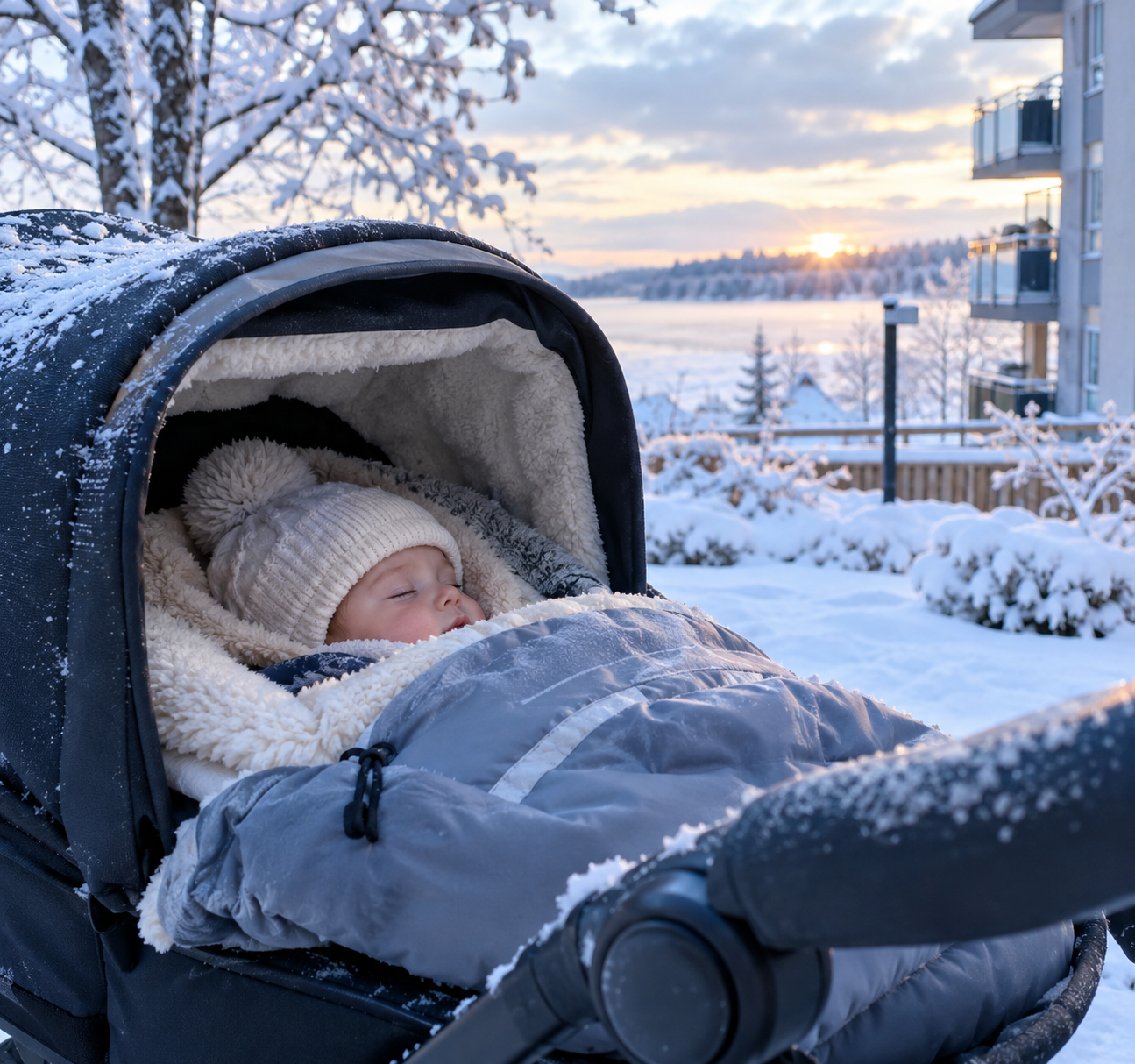
In Finland, where winter temperatures can fall well below freezing and snow can remain on the ground for months, one sight can still surprise visitors: a baby peacefully sleeping in a pram outside.
For many Finnish families, putting a baby down for a daytime nap outdoors is not an unusual parenting choice. It is a tradition that has been passed down through generations and remains part of everyday family life. Babies may sleep on balconies, terraces, in gardens or outside homes, wrapped in warm layers and protected from wind and snow.
The practice is particularly striking to people from warmer countries, where leaving an infant outdoors in freezing temperatures may seem unsafe. In Finland, however, outdoor sleeping has developed alongside a broader culture of spending time outdoors in all seasons.
A tradition that goes back generations
Finnish children have been sleeping outdoors for generations. The Family Federation of Finland describes outdoor naps in prams as a long-standing Finnish tradition, saying the practice has been common among families with babies for centuries.
The custom became particularly widespread in the 20th century. Finnish paediatrician Arvo Ylppö, one of the central figures in the development of Finland’s maternal and child health clinic system, is often credited with promoting the idea of babies spending time outdoors.
According to Yle, the practice of parking sleeping babies outside became widespread nearly a century ago, around the same period when Finland was developing its extensive network of maternal and child health clinics.
That history is important because Finnish parenting culture has long placed emphasis on preventive health care, fresh air and regular outdoor activity.
Finland’s neuvola system, the country’s maternal and child health clinic network, also became an important source of practical advice for parents. The first maternity and child health clinics were established in the 1920s, and municipal child-health services were later established by law. These clinics provided families with regular health checks and health guidance.
As outdoor sleeping became normalised within Finnish families, it was passed from parents to children and from one generation to the next.
What happens when the temperature drops below zero?
A Finnish winter nap does not mean simply putting a baby outside in ordinary indoor clothing.
Parents typically use several layers of clothing, warm winter overalls, hats, mittens and a suitable sleeping bag or other insulation. The pram itself provides protection from wind, while the sleeping environment is carefully monitored.
The Family Federation of Finland recommends gradually introducing winter-born babies to outdoor conditions. Its guidance says outdoor time can begin with short periods and be increased gradually. It also advises against taking very young babies outdoors when temperatures fall below -10°C, while noting that an older baby accustomed to outdoor conditions may sleep outside in somewhat colder weather if properly dressed and protected.
The key principle is therefore not simply “cold is good for babies.” It is that temperature, clothing, wind, shelter and the baby’s individual condition all matter.
Does sleeping outside really make babies sleep longer?
This is one of the most interesting aspects of the Finnish tradition.
Research from the University of Oulu found that babies sleeping outdoors could sleep substantially longer than babies sleeping indoors. A study by researcher Marjo Tourula reported that outdoor naps could last up to three times as long as indoor naps.
In one example reported by Yle, Finnish parents described ten-month-old twins sleeping for around three and a half hours outdoors on a day when the temperature was -11°C, compared with about one hour of indoor sleep the following morning.
Tourula’s research also suggested that around -5°C was an optimal temperature for outdoor daytime sleep in the conditions studied.
However, this should not be interpreted as a universal medical recommendation for every infant or every winter situation. The study was conducted in a specific Finnish context, and safe conditions remain essential.
Interestingly, Finnish parents often report that babies become accustomed to the routine. In a 2018 Yle report, one mother from Kauhava said she had allowed all four of her children to sleep outdoors in winter and that the practice was familiar to her family.
Why might babies sleep better outdoors?
There are several possible explanations, although they should not be confused with proven medical benefits.
One obvious factor is the environment.
Outdoor air is generally cooler and moving air may create a different sensory environment from a warm indoor room. Finnish researchers have observed an association between outdoor naps and longer sleep duration, but that does not mean that cold temperatures themselves are necessarily responsible.
Light may also matter.
Finland experiences enormous seasonal differences in daylight. Researchers at the University of Helsinki and HUS have studied the relationship between season and infant sleep architecture, noting that environmental light is one potential factor affecting sleep at northern latitudes.
For Finnish families, outdoor time also forms part of a broader daily rhythm. Children are routinely encouraged to spend time outside throughout the year, regardless of whether the weather is sunny, rainy or snowy.
A common Finnish attitude is summed up by the saying: “There is no bad weather, only bad clothing.” Finnish childcare culture reflects this approach, with children expected to spend time outdoors throughout the year when appropriately dressed.
Is the cold itself healthy for babies?
This is where the story needs some caution.
The Finnish tradition should not be interpreted as evidence that exposing babies to extreme cold is inherently healthy.
Babies, particularly newborns, have limited ability to regulate their body temperature. The Family Federation of Finland specifically advises parents to introduce winter-born babies to cold conditions gradually and to monitor whether the baby is becoming too cold or too hot.
One practical recommendation is to check the baby’s neck. If the skin is damp or sweaty, the baby may be overdressed. If the baby’s skin is pale and cool, the baby may be too cold.
Layering is important because babies cannot generate as much body heat through movement as older children and adults.
Finnish guidance recommends winter layering, including warm base layers, wool or fleece, suitable outerwear and a sleeping bag when appropriate. Very young children should also have their heads, hands and feet adequately protected.
Outdoor sleeping does not mean leaving a baby unattended
Another important point is supervision.
A pram should be positioned somewhere safe and sheltered, away from traffic and other hazards. Parents need to be able to monitor the baby and respond if the weather changes or the baby’s condition changes.
The Family Federation of Finland suggests that parents can use a baby monitor while the baby sleeps outdoors, although monitoring the baby directly remains important.
The same principle applies in summer. A pram should not be left in direct, intense sunlight because babies can overheat. Shade, appropriate clothing and protection from insects are important considerations.
In other words, the Finnish tradition is not simply about putting a baby outside and walking away. It involves creating a controlled sleeping environment.
What about newborns?
Finnish parenting advice also makes an important distinction between outdoor naps and general safe-sleep recommendations.
THL has stated that the safest sleeping place for a newborn is their own bed in the same room as their parents.
Finnish health guidance also recommends that babies sleep on their backs. Keeping a baby in their own sleeping space is an important part of reducing sleep-related risks.
Outdoor sleeping, therefore, should not be understood as a replacement for safe-sleep principles. Rather, for families who choose it, the outdoor pram becomes a setting for a supervised daytime nap.
The Finnish Family Federation similarly says babies can sleep outdoors, including on a balcony or in a yard, when appropriate and safe conditions are ensured.
The tradition fits Finland’s wider outdoor culture
Perhaps the most important explanation for the popularity of outdoor naps is cultural.
Finland has a strong outdoor culture. Children are routinely taken outside in winter, and Finnish daycare centres often continue outdoor activities even when temperatures fall below freezing.
This is partly reflected in Finnish clothing culture. Layering, wool, waterproof outerwear and insulated footwear are considered basic tools for surviving the country’s changing weather. Finnish childcare professionals commonly emphasise staying warm and dry rather than avoiding outdoor conditions altogether.
The same philosophy extends to babies.
A snowy afternoon does not necessarily mean staying indoors. Instead, parents may dress the baby appropriately, place the child in a warm sleeping bag inside the pram and allow the baby to nap outside while the family continues with its normal routine.
From an old custom to a subject of scientific research
For decades, outdoor sleeping was largely a matter of tradition and parental experience. Finnish mothers and fathers knew that their children often seemed to sleep longer outside, but there was relatively little scientific research into why.
That began to change with research at the University of Oulu.
Marjo Tourula’s doctoral research examined outdoor sleeping among children in the Finnish winter environment. Her work helped bring scientific attention to a practice that had already been part of Finnish family life for generations. Yle reported in 2011 that her findings indicated outdoor naps could be considerably longer than indoor naps.
The research did not transform outdoor sleeping into a universal prescription for babies. Instead, it provided evidence for something Finnish parents had observed for generations: many babies appear to sleep particularly well in cool outdoor conditions.
Why the Finnish practice attracts international attention
The sight of a row of prams outside a café, apartment building or family home can be surprising to visitors in Finland.
In many countries, parents are accustomed to keeping infants indoors during cold weather. In Finland, the sight of a sleeping baby outside can be so ordinary that it barely attracts attention from local residents.
The difference illustrates how strongly parenting practices are shaped by climate and culture.
What may look extreme to someone from a warmer country can seem completely routine to a Finnish parent who grew up with the same practice.
But the Finnish experience also demonstrates that outdoor sleeping is not about ignoring the cold. It is about understanding the cold, preparing for it and learning how a particular baby responds to it.
A tradition that has survived changing times
Finland today has modern heating, well-insulated homes, advanced healthcare and highly developed childcare services. Yet the old habit of outdoor daytime naps has survived.
That may be because the practice combines several familiar elements of Finnish life: fresh air, outdoor activity, practical clothing, a strong preventive-health culture and a willingness to live with the country’s demanding seasons rather than constantly trying to avoid them.
For Finnish parents, a sleeping baby under a thick winter blanket, resting peacefully in a pram while snow falls nearby, is often not an extraordinary sight.
It is simply part of everyday life.
And perhaps that is the most Finnish thing about the tradition: winter is not necessarily a reason to stay indoors. With preparation, care and common sense, it can become part of the baby’s daily world too.
Note: Outdoor sleeping practices vary between families and children. The research on longer outdoor sleep does not establish that freezing temperatures are inherently beneficial, and parents should follow current child-health and safe-sleep guidance and monitor infants carefully.