Politics
Trump meets Xi at the White House; Show-Off or Tension Release?
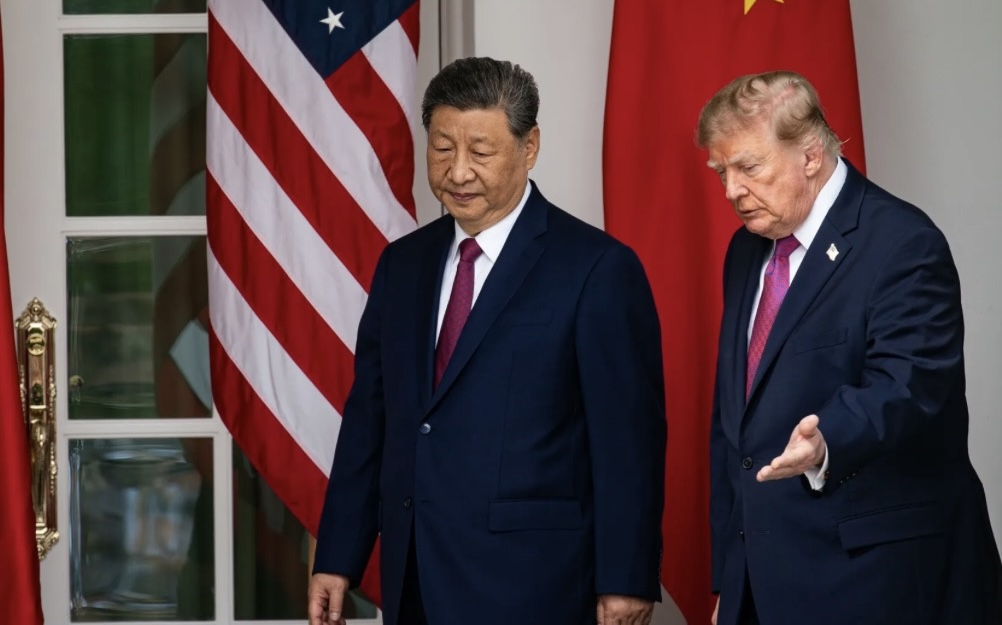
TRUMP MEETS XI AT THE WHITE HOUSE; SHOW-OFF OR TENSION RELEASE?
A spectacular display of power, diplomacy and personal chemistry — but behind the smiles, Washington and Beijing remain deeply divided.
WASHINGTON — September 29, 2026
It was diplomacy with a Hollywood backdrop.
Military flyovers. Red carpets. A lavish state dinner. Cameras everywhere. And at the centre of it all: Donald Trump and Xi Jinping, the leaders of the world's two most powerful economies, standing together inside the White House.
For three days, Washington became the stage for one of the year's most closely watched diplomatic encounters.
But behind the handshakes and carefully choreographed smiles was a much harder question:
Was this the beginning of a genuine easing of U.S.-China tensions — or simply a spectacular display of power?
THE SHOW WAS UNMISSABLE
Xi's state visit was filled with symbolism.
The White House hosted a formal arrival ceremony, military displays and a flyover featuring a B-2 bomber and four F-22 Raptors. The two leaders also attended a state dinner surrounded by senior officials and some of America's most influential business and technology figures.
Trump also showcased his renovated White House and took Xi on tours that highlighted American political and technological power.
The message was difficult to miss:
America was welcoming China — but America was also putting its strength on display.
Reuters described the summit as heavy on ceremony and personal diplomacy, while noting that major disputes remained unresolved.
BUT SOMETHING REAL HAPPENED
Calling the summit merely a photo opportunity would overlook several concrete developments.
Washington and Beijing agreed to reduce tariffs on about $30 billion of goods from each side, extend an existing trade truce and establish a bilateral trade council. The countries also agreed to begin dialogue on artificial intelligence and create communication channels for AI-related incidents.
Those measures do not end the U.S.-China rivalry.
But they could create breathing room.
And in a relationship this tense, breathing room matters.
TAIWAN: THE ELEPHANT IN THE ROOM
One of the most sensitive issues remained Taiwan.
Xi pressed Trump to maintain Washington's opposition to Taiwanese independence. Taiwan subsequently said that its understanding of U.S. policy had not changed following the summit.
That means the meeting did not erase one of the most dangerous fault lines between Washington and Beijing.
The smiles may have been warm.
The strategic calculations were not.
AND THEN THERE IS AI
The next battlefield may not be the Pacific.
It may be the digital world.
Artificial intelligence has rapidly become a central element of U.S.-China competition. The two countries agreed to establish an AI dialogue during Xi's visit, but Trump said on September 29 that closer cooperation with China on AI governance could disadvantage American companies.
So even after the summit, the competition continues.
DIPLOMACY OR DIPLOTainment?
The answer may be: both.
Trump clearly understands the power of spectacle. Xi understands the power of symbolism. Their meeting allowed both leaders to project strength while keeping direct communication open.
There was no grand peace agreement.
No historic settlement over Taiwan.
No end to the technological rivalry.
But there were trade concessions, new communication channels and an agreement to keep talking.
That may be less dramatic than a breakthrough — but potentially more important than a photograph.
THE BIG QUESTION
The Trump-Xi summit demonstrated something that Washington and Beijing cannot ignore:
They need each other — even while competing against each other.
The United States wants to protect its technological and economic advantage. China wants greater access to global markets and recognition of its strategic interests. Neither side appears ready to abandon the rivalry.
But neither appears eager to let that rivalry spiral completely out of control.
For now, the two leaders have chosen dialogue over confrontation.
Whether that becomes a lasting diplomatic reset or merely a pause before the next round of confrontation remains to be seen.
The cameras have gone.
The handshakes are over.
Now comes the real test.