Feature-News
From Steam to Speed: The Tracks That Built Modern Finland
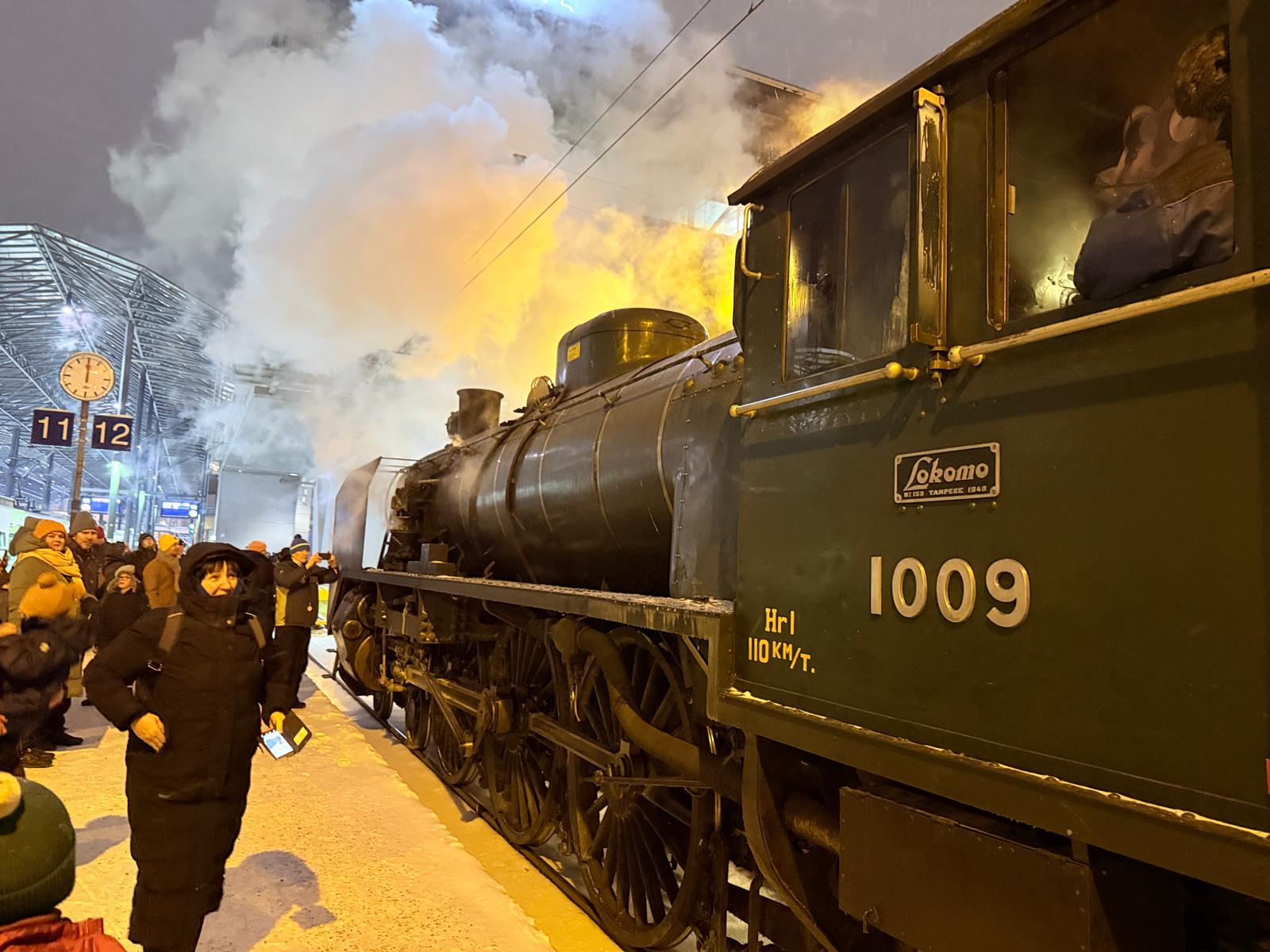
HELSINKI — Finland’s railway system, which began with the first scheduled train from Helsinki to Hämeenlinna in 1862, continues to evolve as a backbone of national transport more than 160 years later.
The country’s rail network was originally built to the Russian broad gauge of 1,524 mm under Russian imperial rule and expanded steadily to connect major cities and ports across the country before Finland’s independence in 1917.
State ownership and consolidation shaped Finnish railways throughout the 20th century. The national carrier, today known as VR Group, emerged from the original Valtionrautatiet foundation and dominated Finnish rail operations for decades. By the late 20th century, most private lines had either closed or been absorbed into the state system.
Modernization efforts transformed the system from diesel to electric traction beginning in the late 1960s. Over time, major routes including the Finnish Main Line — stretching from Helsinki to Oulu — have been electrified, improving speeds and sustainability.
Key infrastructure milestones in recent years illustrate ongoing renewal and expansion. Projects like the Ring Rail Line, opened in 2015, have reconfigured commuter transport by linking the Helsinki commuter rail network directly with Helsinki Airport, serving tens of thousands of passengers daily.
Rail management was restructured in the 1990s and early 2000s, separating infrastructure and operations. Track ownership and upgrades are now handled by the Finnish Transport Infrastructure Agency, while VR focuses on passenger and freight services.
Rail electrification continues to expand in 2025 and 2026, with recently completed projects enabling electric freight on lines such as Hyvinkää–Hanko, further reducing carbon emissions and improving efficiency.
Looking ahead, national regulators are reviewing proposals to open more rail services to competition after 2030, as part of broader EU-linked reforms.
Despite these advances, Finland’s distinctive broad gauge remains a topic of discussion. While a recent study noted conversion to the European standard gauge is not financially viable on existing lines, the Ministry of Transport is reconsidering broader gauge questions in the context of regional connectivity and security.
From their 19th-century origins to 21st-century electrification and reform, Finland’s railways continue to connect communities, support economic growth, and evolve toward a greener future.