Politics
Coalition Politics Define Finland’s Government as Major Parties Navigate Shifting Support
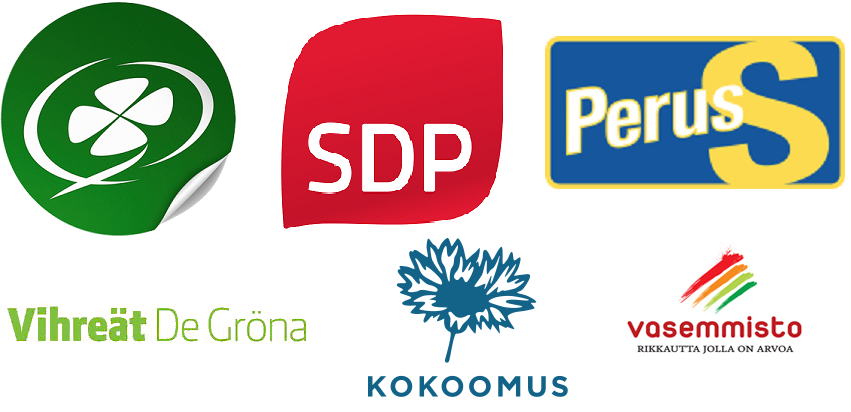
HELSINKI — Finland’s multi-party political landscape continues to shape national governance, with coalition building central to political stability and policy direction. The current government, formed after the 2023 parliamentary elections, brings together several key parties from across the centre-right and right of the political spectrum.
At the core of the ruling coalition is the centre-right National Coalition Party (NCP) (Kokoomus), led by Prime Minister Petteri Orpo, which emphasizes pro-business and liberal conservative policies. Alongside it stands the nationalist Finns Party (Perussuomalaiset), giving the government a strong populist voice in debates over immigration, fiscal policy and national identity.
Supporting the government are two smaller parties: the Swedish People’s Party (Ruotsalainen kansanpuolue, RKP), representing Finland’s Swedish-speaking minority with a liberal and pro-European orientation, and the Christian Democrats, focused on traditional values. Together these parties hold a majority in the Eduskunta, Finland’s parliament.
Beyond the coalition, Finland’s political spectrum includes other influential groups. The Centre Party (Keskusta) remains rooted in rural and agrarian communities, while the Green League (Vihreät) emphasizes environmentalism and social equality. On the left, the Left Alliance advocates progressive social policies, and the Social Democratic Party (SDP) — a major centre-left force — continues to hold significant support despite currently sitting in opposition.
Recent polls indicate fluctuating support for both governing and opposition parties, with some surveys showing the coalition’s overall backing at historic lows, while the SDP maintains a lead in voter preference, underscoring dynamic public sentiment ahead of the next scheduled parliamentary elections in 2027.
Finland’s coalition system, designed to foster broad majority support across multiple parties, remains a defining feature of its political process — requiring ongoing negotiation, compromise, and adaptation as parties respond to public priorities and global challenges.
Major Parties
- National Coalition Party (NCP) (Kokoomus): A pro-business, centre-right party with conservative and liberal leanings, currently leading the government.
- Finns Party (Perussuomalaiset): A populist, nationalist party that has shifted rightward, holding significant influence.
- Centre Party (Keskusta): Centrist, with strong ties to rural areas, representing agrarian interests.
- Green League (Vihreät): Focuses on environmentalism and equality, popular in urban areas.
- Left Alliance (Vasemmistoliitto): A leftist party advocating for social justice, popular with younger voters.
Other Significant Parties
- Swedish People's Party (RKP): Represents the interests of Finland's Swedish-speaking minority, particularly strong in coastal regions.
- Christian Democrats (KD): A conservative party centered on Christian values.
- Social Democrats (SDP): A major center-left party, often a key player in government formations, though not in the current ruling coalition.
Government Structure
- Finnish governments are typically coalitions, forming broad majorities with several parties.
- The current government, formed after the 2023 elections, includes the National Coalition Party, the Finns Party, the Swedish People's Party, and the Christian Democrats.